
Start Your Cloud

Web Security Service

Cloud App Assessment
The Importance of Data Security
About Us
From Vinnytsia to the World
KVARK Consulting is a shining example of academic excellence combined with deep engineering knowledge. Founded in March 2013 in Vinnytsia by senior faculty members and researchers from Vinnytsia National Technical University (VNTU), we bridge the gap between advanced scientific research and practical IT solutions. We combine our strong technical roots with global industry standards to build clean, scalable, and impactful digital products. We pride ourselves on building long-term relationships with our clients and partners — including leading global companies from the USA, Israel, Germany, and Canada.
Bridging Education and Industry for the Next Generation of IT Talent
Having our roots in academia, we maintain a deep, strategic partnership with Vinnytsia National Technical University (VNTU). We believe that the future of technology belongs to the next generation, which is why we actively invest in young talent. Through joint educational initiatives, specialized workshops, and mentorship programs, we help ambitious students bridge the gap between university theory and real-world software engineering. By fostering this vibrant ecosystem, we not only support local youth but also ensure a steady influx of fresh ideas and cutting-edge expertise into our projects.
The Principles That Guide Us
At KVARK Consulting, our work is driven by three core principles. Coming from a strong scientific background, we approach every project with academic rigor and engineering excellence, ensuring our solutions are high-performing and built to last.
Integrity
We believe in absolute transparency and deep responsibility toward our clients, building partnerships based on mutual trust.
Precision
We approach every project with academic rigor and engineering excellence, ensuring our solutions are high-performing.
Continuous Growth
We remain deeply committed to development — constantly evolving our technological expertise and investing in talent.
Connect With Us
Whether you are a business looking for a trusted technology partner or a passionate talent eager to shape the future of IT, we would love to hear from you. Let’s create something impactful together.
Get in TouchSystem Development
In partnership with Transfosoft we provide full cycle development and testing software and hardware. Our System Development Life Cycle Phases are used as a conceptual model that includes the procedures and policies necessary to develop or alter a system throughout a life cycle. The end result should be a high-quality system that meets or exceeds customer expectations and is within time and budget constraints. Within this framework, these are the main system development life cycle phases:
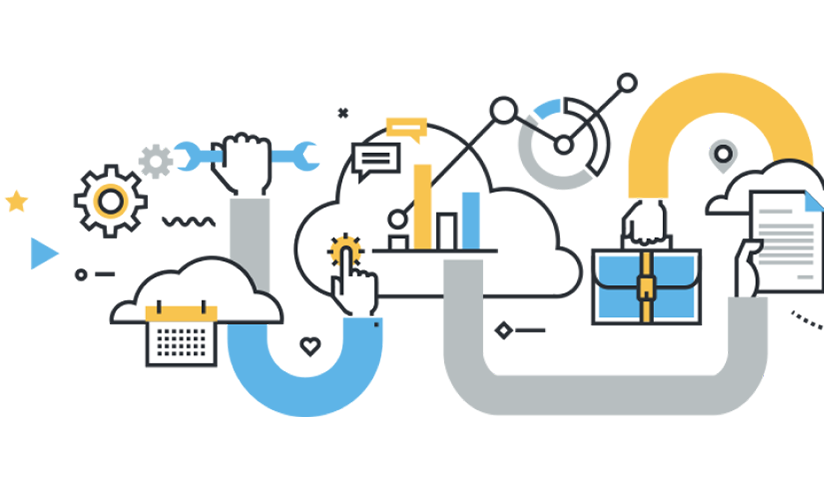
Initial phase of the SDLC process that sets out to discover, identify, and define the scope of the project to decide the course of action and specifically address the issues that are going to be solved by the new system solution. This crucial phase sets the tone for the overall success of the project, which is why it is during this phase that thorough research is performed to determine resources, budget, personnel, technical aspects, and more.
The purpose of this phase is to understand the business and processing needs of the information system project. Here, the development team considers the functional requirements of the system to assess how the solution will meet the end user’s expectations. The end user requirements are determined and documented and a feasibility study is typically performed to determine if the project is feasible from a financial, organizational, social, and technological standpoint.
After a comprehensive analysis phase, the design phase surfaces. In this third phase, the elements, components, security levels, modules, architecture, interfaces and data of the system are defined and designed to evaluate how the finished system will work and what it will look like. The system design is produced in detail to ensure the system will include the necessary features to meet all functional and operational aspects of the project.
An approved design phase is the catalyst for the next and fourth phase: the development of the information system. In this phase, the development team is hard at work writing code and constructing and fine-tuning the technical and physical configurations necessary to build the overall information system. This is considered by many as the most robust phase in the life cycle as all the labor-intensive efforts are made here, signifying the real start of software production and installation of hardware as necessary.
This phase involves the Quality Assurance (QA) team who is in charge of performing the overall system testing to determine if the system solution meets the set of business goals and if it performs as expected. Additionally, in this phase, all the different components and subsystems of the solution are brought together to bring the whole integrated system alive. As we’ve discussed in previous articles, testing is becoming increasingly important as it helps ensure customer satisfaction by establishing that the system is fault-free.
After the system is given a green light from the QA team, it is brought into a production environment. In essence, during this phase, the project is released to be used and/or installed by end users.
In this final phase, end users can fine-tune the system as necessary to increase performance, add new features and capabilities, or meet new requirements brought to the table by the client. This phase ensures the system remains relevant and usable by replacing old hardware, improving the software, evaluating performance, and applying new updates to make sure it meets all necessary standards and includes the latest technologies to face cybersecurity threats.
Cloud Solution

Start Your Cloud

Cloud App Assessment

Cloud Migration

Cloud Development
Security Solutions
The Importance of Data Security
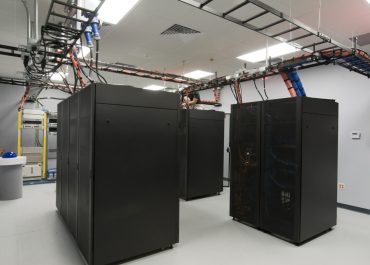
Truly securing the data of your company and your customers is vital to business success. In today’s world of identity theft and data thieves, many small companies are unfortunately ill-prepared to handle the heavy weight of the responsibility they have for this data.
Most small businesses understand the importance of providing secure storage for their customers’ data. After all, they’ve seen the results of improper storage of data. When a company has to send out a letter to its customers informing them that their private information has been compromised, customers begin to think twice about doing business with that company.
Our solution can work with file share cloud services like Google Drive, BoxNet, Dropbox, Microsoft SkyDrive, etc. , it can encrypt files and folders on local hard drive and encrypt email and email databases of mail clients.
Solution uses Elliptic curve discrete logarithm with 1024bit key size, that fully exponential. It’s means that without key decryption of the data becomes impossible.
Base goal of software is encryption files on the fly, this is possible by encryption of file by parts in different streams, that’s utilize computing power and speed up encryption process.
Basic algorithm of the encryption:
1. Split data to encrypt to pieces;
2. Perform simultaneously encryption of each piece of data;
3. Merge encrypted data back;
4. Processes of data upload to cloud services or write to disk.
Features
- Encryption of any folder on disk;
- Support many cloud storage services;
- Email encryption;
- User can define encryption key size;
- User can send encrypted file to other users
Functionality of the solution based on encrypting whole system, not files or folders only, it works through low system kernel operations. Control of encryption for instances provided via Web UI, where user can start, stop or reboot instances, create instances from prepared AMI or convert own running instances to encrypted environment. Web UI have own rules and policy management for the instances activities.
Supported OS
- Windows
- CentOS
- Red Hat Linux
- Ubuntu
- Debian
- SUSE
Cloud services
- Amazon AWS
- RackSpace
- Eucaliptus
- VMware
- vCloud
Features
- Encrypt whole disk
- Encryption of working instances
- Manual and policy based boot sequence control
- Pre-launch authentication
- Key short expiration term
- User friendly UI
Logging levels
- Key press
- SMS\MMS\Email
- Social applications
- Geo Position
- Call Events logging
- Contacts logging
Remote Control
All famous Cloud Services providers work with instances without data encryption. It means all data stored on the cloud is unencrypted and can affect security of business. Cloud Crypto service developed to eliminate this vulnerability of cloud services. It can work with Linux distributions (Ubuntu, Debian, RedHat, CentOS) and Windows distributions under Amazon EC2 and Rackspace.
Mobile Security
Mobile application developed for business data protection cares about logging all employers actions, preventing business information leaks from devices.
Vulnerabilities
The Threats We Protect You From
Modern web applications face a constantly evolving threat landscape. Our security team audits your applications against the most critical and widespread vulnerability classes — following OWASP guidelines and industry best practices — before attackers find them first.
SQL Injection
Malicious database queries injected through unvalidated input can expose, modify, or destroy your data. We test every entry point of your application.
Cross-Site Scripting (XSS)
Injected scripts running in your users’ browsers can steal sessions and credentials. We detect reflected, stored, and DOM-based XSS.
Broken Authentication
Weak session management and credential handling let attackers impersonate legitimate users. We verify your entire authentication flow.
Sensitive Data Exposure
Improperly protected data — in transit or at rest — is a direct path to breaches and compliance violations. We check encryption, storage, and transport.
Security Misconfiguration
Default credentials, open cloud storage, verbose errors, and outdated components are the most common findings. We review your full stack configuration.
CSRF & Access Control Flaws
Forged requests and broken authorization let users act beyond their permissions. We test role boundaries and state-changing operations.
How Our Security Audit Works
Scope & Discover
We map your application surface, technologies, and business-critical flows.
Assess & Exploit
Combining automated scanning with manual testing, we verify each finding to eliminate false positives.
Report & Prioritize
You receive a clear report with severity ratings and practical remediation steps for your team.
Verify & Support
After fixes are applied, we re-test to confirm every vulnerability is truly closed.
Not sure how secure your application is? Start with a professional security assessment.
Request an Audit